



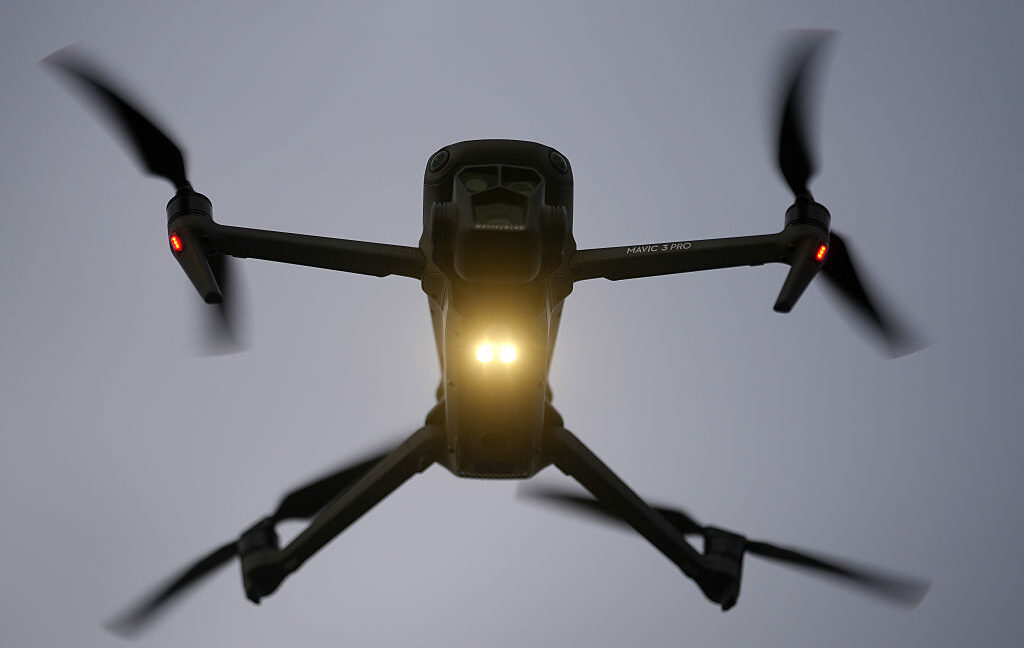
Here's a thinking process:
1. Analyze User Input: - Category: Technology News - Title: Trump’s 100% tariff on drones will be disaster for the US, critics warn - Source: Ars Technica (en) - Details: Text provided about Trump administration imposing 100% tariffs on foreign-made drones, specifics about thermal imaging/weight thresholds, tiered tariffs on smaller drones and allies' drones, criticisms from NYT/DJI estimates, use of thermal drones for public safety, quotes from officials, etc. - Task: Create an article of at least 450-600 words, minimum 3
subheadings, high information density, following BlogVadi's corporate standards.
- Mandatory Quality Rules:
- Never write empty or bare definitions ("X is a feature in Y. It helps users.") - must explain with reasons, technical background, comparisons, user benefits.
- Must have at least 3-4 subheadings.
- No repetition of same info or similar sentence patterns.
- Forbidden keywords/phrases: 'Result', 'As a result', 'In summary', 'Let's explore together', etc.
- Do not use thought process steps or prelude text; output only the formatted article.
- Output Format: Specific format with TITLE, SUMMARY, CONTENT (with s), SEO_TITLE, SEO_DESC, TAGS.
s), SEO_TITLE, SEO_DESC, TAGS.
2. Deconstruct the Source Text & Expand/Structure: Key points from the source: - Trump admin imposed 100% tariff on foreign-made drones starting Thursday. - CBP guidance: 100% tariff on imported drones with thermal imaging or >55 lbs. - 25% tariff on smaller drones. - 10% on UK, 15% on EU, Japan, Liechtenstein, South Korea, Switzerland, Taiwan. - "Nonsensitive" drones without thermal imaging & components: 25% tariff starting Feb 9, 2027. - Trump's rationale: strengthen national security, reduce reliance on Chinese drones, increase domestic reliance. - Critics: short-sighted, harmful. DJI makes >70% of commercial drones globally. - Fear: tariffs do "more harm than good", drones essential for law enforcement/public safety. - Thermal drones used for: finding missing people, tracking wildfires, police/rescue ops in risky environments. - Quote: Scott Mlakar (Cleveland area unit chief) says tariffs will spike costs, likely put thermal drones out of reach for needed communities. - broader implications: US drone ecosystem, supply chain, public safety, national security trade-offs.
I need to expand this into a 450-600 word article, with high info density, no fluff, no empty definitions, at least 3
subheadings. Must avoid forbidden phrases. Must follow output format exactly.
3. Drafting - Section by Section (mental or scratchpad):
Title: Needs to be natural, catchy, no "Result" or "Summary" in title. Just the topic. - Possible: "100% Tariff on Foreign Drones Threatens US Public Safety and Industry" Summary: 140-155 chars. Must be professional spot summary. I'll craft after content. Content: Need at least 3s. I'll structure:
- first: The Tariff Structure and Immediate Policy Details
- second: National Security Rationale vs. Operational Realities
- third: Industry Impact, Public Safety Risks, and the Path Forward
Maybe a fourth for completeness, but 3 minimum. I'll aim for 3 solid ones, maybe 4 if natural.
second: National Security Rationale vs. Operational Realities
- third: Industry Impact, Public Safety Risks, and the Path Forward
Maybe a fourth for completeness, but 3 minimum. I'll aim for 3 solid ones, maybe 4 if natural.
Let's expand each section with deep detail, no fluff, technical/contextual depth.
Section 1: Tariff Structure - Detail the 100% on thermal/heavy drones. - 25% on small drones/components starting 2027. - Tiered tariffs on allies: UK 10%, EU/Japan/etc 15%. - CBP guidance, effective dates. - Explain why thermal/weight thresholds matter (military/public safety use cases). Section 2: Security Rationale and Domestic Goals - Trump's stated goal: reduce Chinese reliance, boost domestic production. - Reference DJI's 70%+ market share. - Analysis of "domestic drone" landscape: who's producing, capacity gaps, supply chain dependencies. - Economic nationalism vs. practical security. Section 3: Criticisms and Public Safety Fallout - NYT/critics view: more harm than good. - Thermal drones in public safety: search/rescue, wildfire tracking, police risk mitigation. - Scott Mlakar quote context, cost implications, community impact. - Potential bottlenecks: if 70% of commercial drones come from China, tariffs immediately raise costs, may ground operations, affect response times. Section 4: Outlook and Sector-Wide Implications (optional, but I'll integrate as third or fourth. I'll stick to 3s as required, but can have 3 main content blocks. The format says "at least 3-4 ". I'll do 4 to be safe and natural.)
Let's plan 4
s: 1. Tariff Mechanics and Policy Breakdown 2. Security Arguments and the Domestic Drone Gap 3. Public Safety and Operational Consequences 4. Long-Term Industry Trajectory and Policy Recommendations
But careful: rules say "EN AZ 3-4 ADET
ALT BAŞLIĞI ZORUNLUDUR" -> at least 3-4. I'll do 4.
Now, write content. Must avoid forbidden phrases: 'Result', 'As a result', 'In summary', 'Let's explore together'. I'll be careful with transitions.
Word count target: 450-600 words. I'll aim for ~500-550.
Let's draft mentally, then format.
TITLE: 100% Tariff on Foreign Drones Threatens US Public Safety and Industry SUMMARY: (will craft after content, but roughly: Trump administration’s sweeping drone tariffs risk crippling public safety operations and US businesses, critics warn, even as the White House frames the move as a national security measure.) CONTENT: (Start with deep context, no empty definitions.)


Comments (0)
You Have No Comments Yet
Engage with the community by commenting on posts that interest you.
Leave a Comment